


Advanced Copper Wound Care
4" × 4.5" Three-Layer Dual-Sided Non-Adhesive Antimicrobial Copper Wound Dressing
4" × 4.5" Three-Layer Dual-Sided Non-Adhesive Antimicrobial Copper Wound Dressing
Couldn't load pickup availability
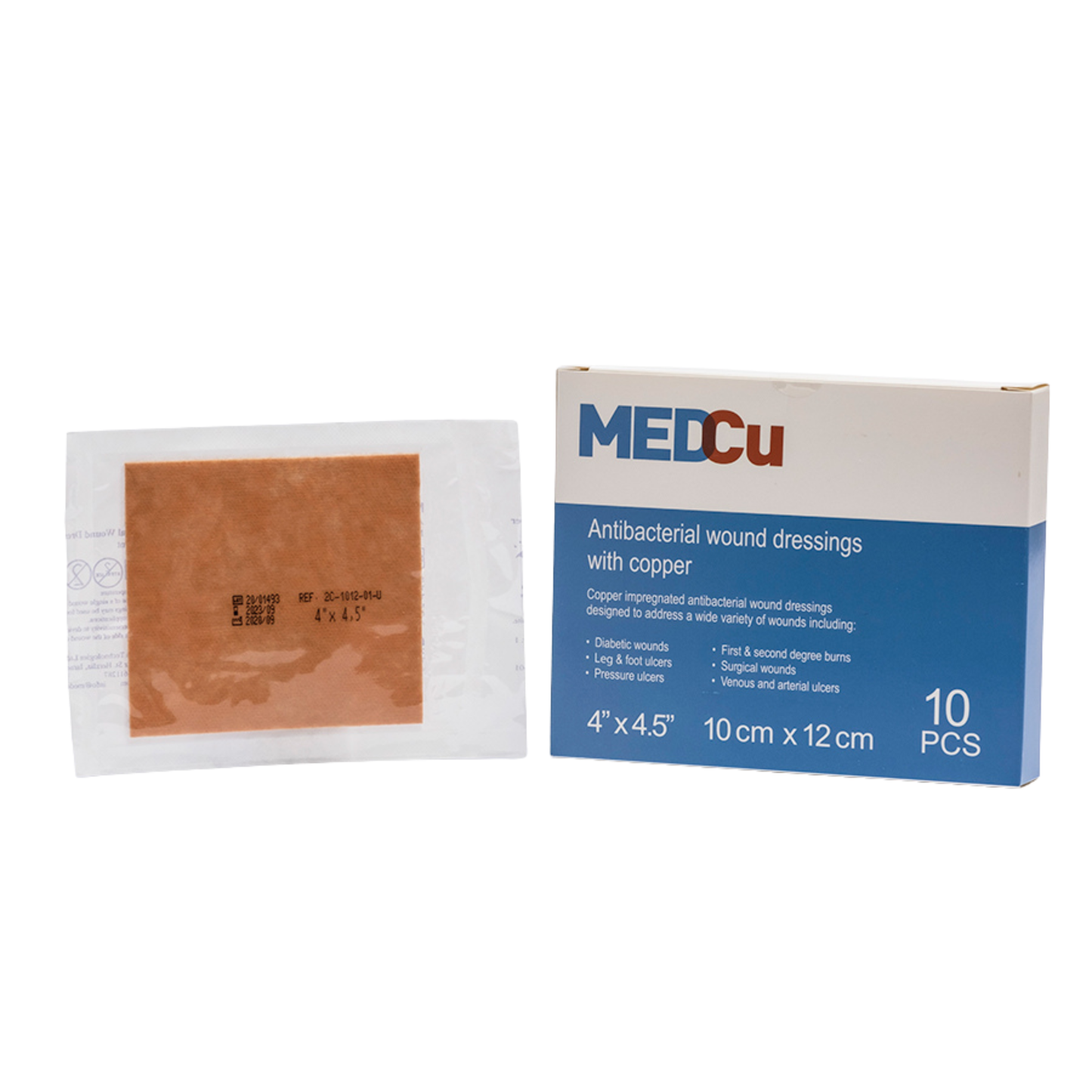
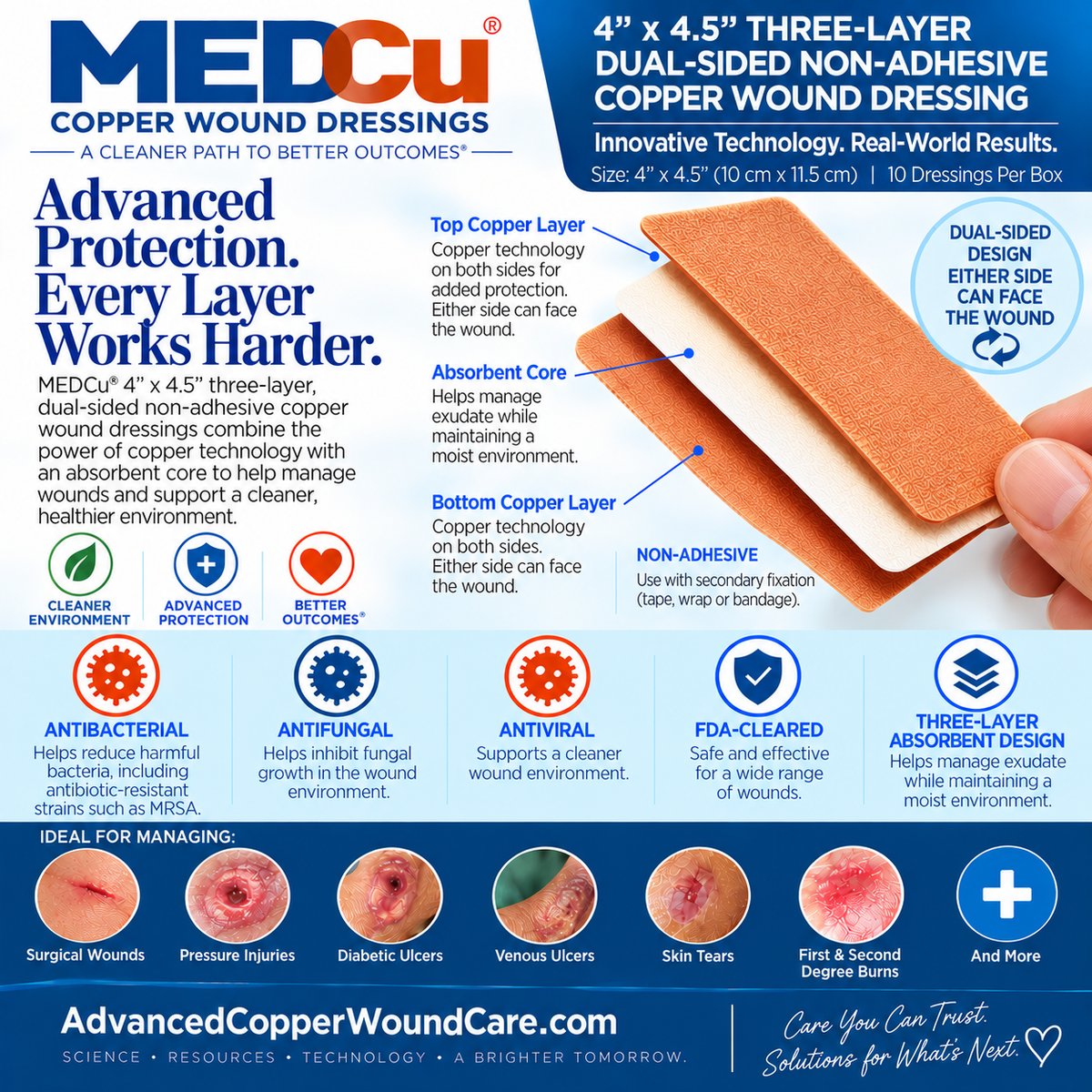
The Advanced Copper Wound Care 4″ × 4.5″ dual-sided antimicrobial wound dressing is an FDA-cleared copper-oxide dressing engineered for high-movement areas, skin folds, underarms, and groin wounds. This flexible, non-adhesive antimicrobial dressing offers three-layer construction and dual-sided placement for complex, hard-to-reach wound sites.
This is one of six non adhesive copper wound dressing sizes and configurations available from Advanced Copper Wound Care. Not sure which size or shape is right for your wound? See the Dressing Size Guide.
Best Used For:
Ideal for areas that move or have natural creases.
Best for:
-
Underarms or folds
-
Groin or high-movement areas
-
Situations needing flexible dual-sided placement
-
Use with secondary fixation (medical tape, gauze wrap or cohesive wrap)
This dressing may be trimmed if needed. Cut slightly larger than the wound to maintain full coverage.
- FDA-Cleared copper-oxide antimicrobial wound dressing
- Single-use dressing designed to remain in place for up to 7 days before changing, depending on wound condition
- High-absorbency design that holds up to 10× its own weight
- Internal absorbent layer with one or two external non-woven, non-adherent layers
- Copper oxide integrated throughout all layers of the dressing
- Sterile and designed for everyday wound care
- Non-irritant and non-sensitizing
- Suitable for a variety of wound types, including chronic wounds, post-procedure recovery sites, stalled wounds and hard-to-heal wounds
Share
Clinical Case Studies
Clinical Case Studies
Copper-oxide dressings are widely used by healthcare professionals in the management of complex and hard-to-heal wounds. The following case examples highlight documented clinical use in challenging wound environments. Individual results may vary, and these examples are provided for educational purposes only.
Case Study 1: Reducing Chronic Inflammation & Biofilm
View PDF
Case Study 2: Complex Venous Ulcer Case Example
View PDF
Disclaimer: These case studies are for informational and educational purposes only. They do not constitute medical advice or a guarantee of outcomes. Always consult a qualified healthcare professional for diagnosis and treatment recommendations.
Customers are saying


Collapsible content
Product Details & Technology
FDA-cleared copper antimicrobial wound dressings provide continuous, broad-spectrum antimicrobial protection at the wound surface, supporting care for complex wounds, post-procedure recovery, HS (Hidradenitis Suppurativa)
wound care, and wounds that have stalled under standard care. Copper-oxide technology has demonstrated broad-spectrum antimicrobial activity against a wide range of microorganisms, including antibiotic-resistant bacteria, helping support a wound environment less favorable to harmful microbes without the use of antibiotics or topical drugs.
Copper-oxide technology is designed to work continuously while the dressing
is in place, helping create a wound environment that is hostile to harmful
microorganisms yet safe for human tissue. This medication-free approach
supports the body’s natural healing process without antibiotics, topical drugs, or chemical agents.
Copper antimicrobial wound dressings are widely used in advanced wound care settings for individuals managing HS
(Hidradenitis Suppurativa), where chronic inflammation, drainage, and recurrent wounds require consistent antimicrobial protection. By helping reduce bioburden and supporting cleaner wound conditions, these FDA-cleared dressings may help improve comfort and healing progression in sensitive and hard-to-manage areas.
Backed by more than 15 years of scientific research, copper-oxide wound dressings have demonstrated effectiveness against a broad range of bacteria, fungi, and viruses, including drug-resistant organisms commonly associated with delayed healing. This makes them well-suited for chronic wounds, post-surgical sites, HS-related wounds, and other complex wounds.
Why Copper?
Why Copper?
Copper has been used for centuries in wound care due to its antimicrobial properties. In these dressings, copper oxide is integrated throughout the material to provide continuous antimicrobial activity while the dressing is in place. Copper-based dressings help maintain a moist wound environment and support consistent wound care without the use of topical medications.
When and How to Use
When to Use:
Non-adhesive copper dressings are commonly used for post-procedure recovery, stalled wounds, hard-to-heal skin areas, and areas affected by HS (Hidradenitis Suppurativa).
Because the dressing does not contain an adhesive border, it can be easily secured based on the size and location of the wound using common options such as bandages, dressing tape, Hypafix® tape, or other appropriate secondary dressings. This allows for greater customization and comfort, especially in sensitive or hard-to-dress areas.
Adhesive copper dressings are commonly used for post-procedure recovery, stalled wounds, hard-to-heal skin areas, and areas affected by HS (Hidradenitis Suppurativa). Select a dressing size that covers the wound and extends slightly beyond its edges. The dressing may be trimmed to fit the wound area as needed using clean scissors. Note: Trimming adhesive dressings may reduce the adhesive border. Apply the dressing with the copper-impregnated layer (orange side) facing the wound bed. Smooth gently to ensure full contact with the skin. Secure the dressing with an appropriate secondary dressing.
Ribbon-style copper dressings are intended for narrow, elongated, or hard-to-reach wound areas. They are commonly used in skin folds, tunneling wound areas, and locations where standard square dressings may not fit comfortably.
Simplified Instructions For Use:
Cleanse the area according to standard wound care practices. Select a dressing size that covers the wound and extends slightly beyond its edges. The dressing may be trimmed to fit the wound area as needed using clean scissors. Note: Trimming adhesive dressings may reduce the adhesive border. Apply the dressing with the copper-impregnated layer (orange side) facing the wound bed. For three-layer dressings, both sides will appear orange, as copper oxide is impregnated on both sides of the dressing. Smooth gently to ensure full contact with the skin. Secure the dressing with an appropriate secondary dressing.
Safety and FAQs
Safety & Care
For external use only. Do not use if you have a known sensitivity or allergy to copper or any component of the dressing. This dressing is single use only and should not be reused once removed.
Discontinue use if irritation, increased pain, redness, or unexpected skin changes occur, and consult a healthcare professional if concerns arise. Do not use on third-degree burns. Use care when applying to sensitive skin or areas requiring frequent monitoring.
Store dressings in a cool, dry place and keep in original packaging until use. Do not use if the package is opened, torn, or damaged.
Information provided is for educational purposes only and is not a substitute for professional medical advice.
FAQs
How long can I wear this dressing?
Many customers wear the dressing for up to 7 days, depending on wound condition, location, and drainage. Change the dressing as needed or sooner if it becomes loose, saturated, or compromised.
Is this a single-use dressing?
Yes. This is a single-use dressing designed for one continuous wear period. Once removed, the dressing should be discarded and replaced with a new one if continued coverage is needed.
Which side of the dressing goes on the wound?
The copper-impregnated layer is the orange-colored side. This side should be placed directly against the wound or affected skin area.
Can the dressing be cut to fit my wound?
Yes. The dressing may be trimmed to fit the wound area as needed using clean scissors, while ensuring full coverage of the affected area.
Is this dressing suitable for sensitive skin?
The dressings are non-irritant and non-sensitizing. If irritation or discomfort occurs, discontinue use and consult a healthcare professional.
Is this dressing appropriate for HS (Hidradenitis Suppurativa)?
These dressings are commonly used by individuals for hard-to-heal skin areas and areas affected by HS. Individual needs vary, and guidance from a healthcare professional may be helpful.
Do non-adhesive dressings need to be secured?
Yes. Non-adhesive dressings should be secured with an appropriate secondary dressing such as a bandage, dressing tape, or medical fixation tape, depending on the size and location of the wound.
When should I stop using the dressing and seek medical advice?
If increased redness, pain, irritation, drainage, or unexpected changes occur, discontinue use and consult a healthcare professional.
Clinical Case Studies
Copper-oxide dressings are widely used by healthcare professionals in the management of complex and hard-to-heal wounds. The following case examples highlight documented clinical use in challenging wound environments. Individual results may vary, and these examples are provided for educational purposes only.
Case Study 1: Reducing Chronic Inflammation & Biofilm
View PDF
Case Study 2: Complex Venous Ulcer Case Example
View PDF
Disclaimer: These case studies are for informational and educational purposes only. They do not constitute medical advice or a guarantee of outcomes. Always consult a qualified healthcare professional for diagnosis and treatment recommendations
- 5 stars: 1 (100%)
- 4 stars: 0 (0%)
- 3 stars: 0 (0%)
- 2 stars: 0 (0%)
- 1 star: 0 (0%)
I must say these copper bandages are amazing, anytime I feel a HS flare coming on I put a dressing over the infected area for 7 days and it stops the flare in its tracks. I have also put dressing over my older wounds and they healed dramatically with in a few days!!! I absolutely love these bandages